



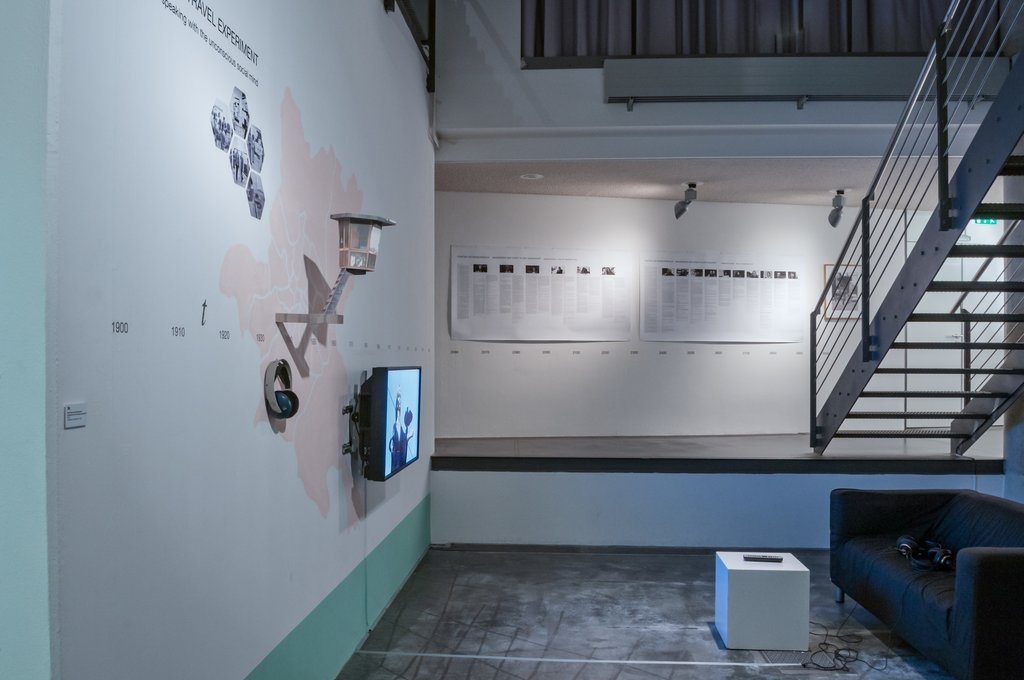
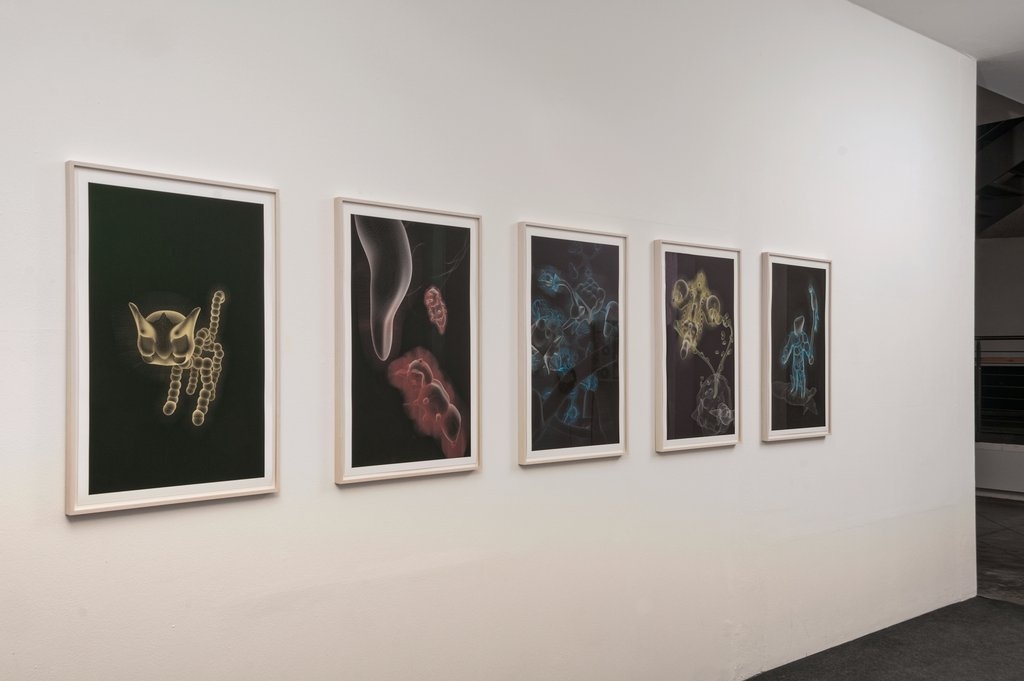
The Edith-Russ-Haus for Media Art presents the solo exhibition Discrete Farms – Somewhere the meat has to come from of the artist duo Hörner/Antlfinger represent a committed position in contemporary media art. The latest production
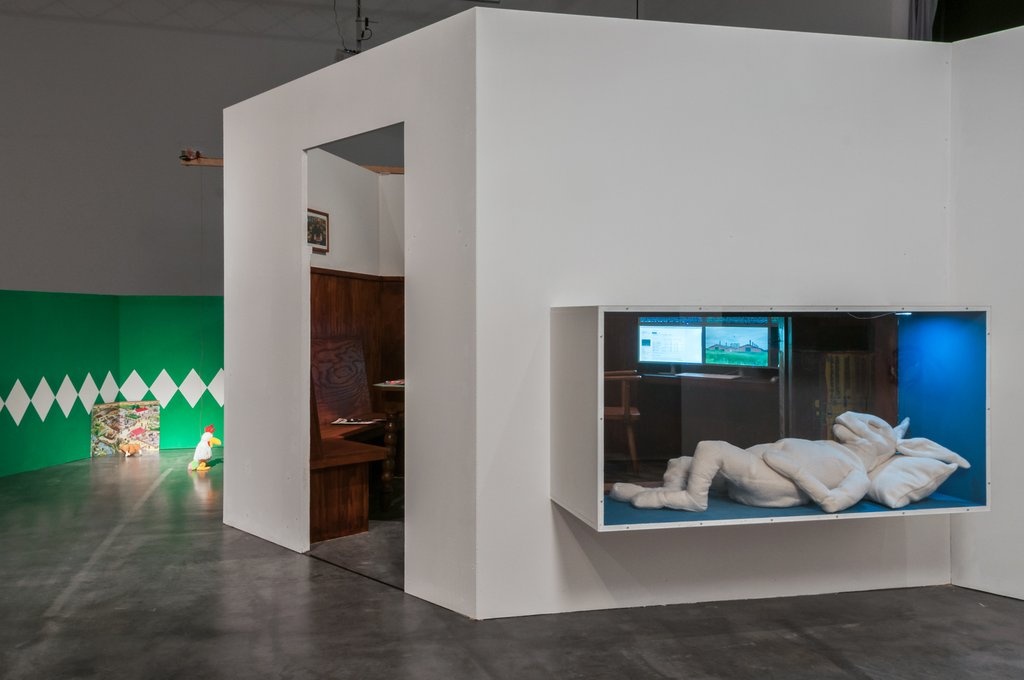
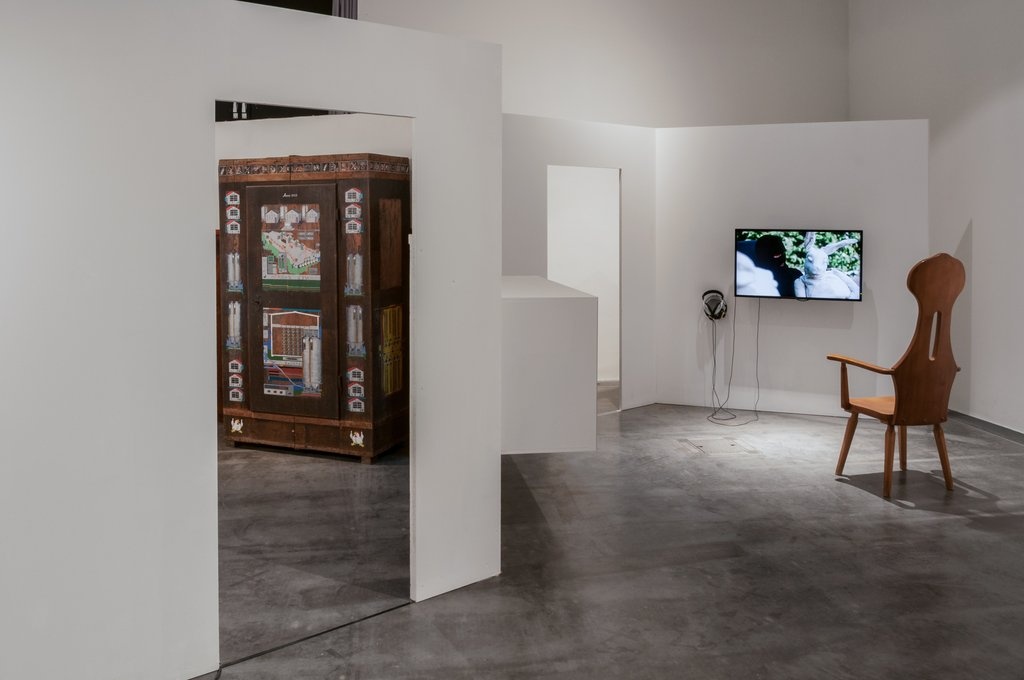
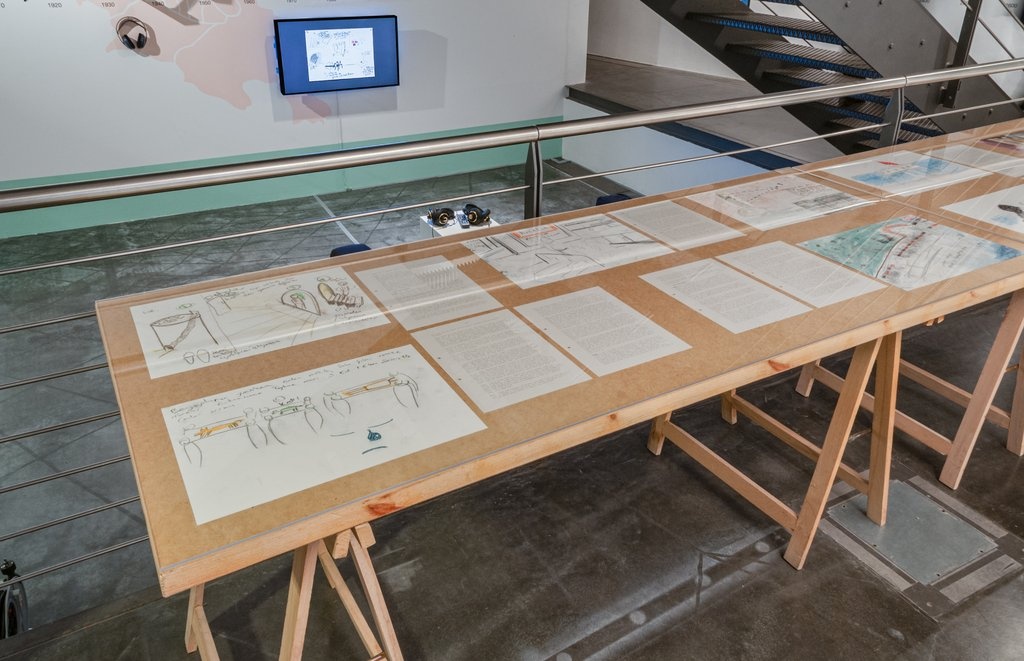
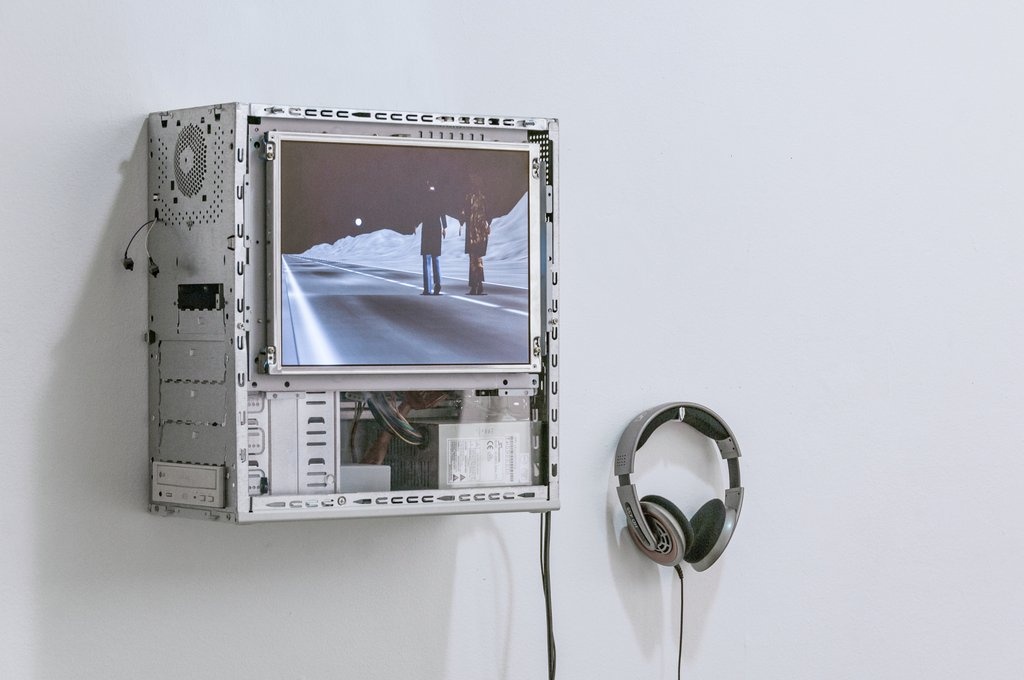
Hörner/ Antlfinger present their scholarship project in the upper exhibition room factory≠farm, in which the animal industry in Lower Saxony is used as a local example of the delicate relationship between humans and non-human animals in the computer age. In their research, the artist duo traced media phenomena and the lack of transparency in this food industry. Bauer Kyber’s Ops Room invites you to watch the graphically sophisticated simulation of a 50,000 chicken fattening facility from the comfort of a corner bench.
In the immediate vicinity stands Kramfors, a naturalistically modeled calf, which was given a new skin after the systematic dismantling of a leather couch.
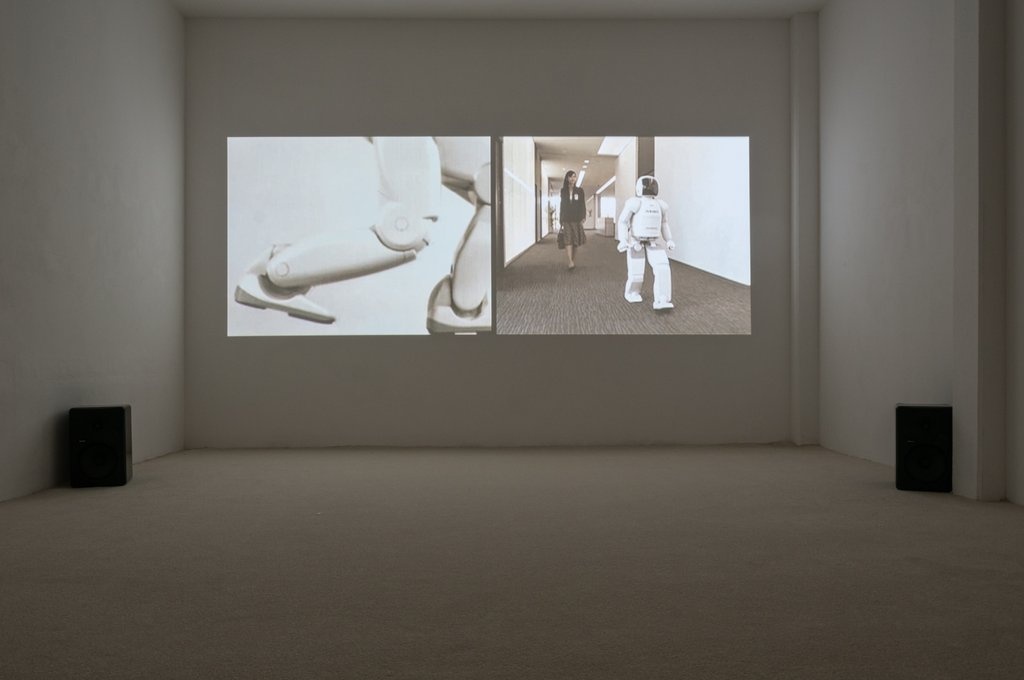
In their latest video work, two activist rabbit puppets as alter egos of the artist couple enter into a dialog about alternative models to meat consumption, a constant form of communication in the work of Hörner/Antlfinger, which helps thoughts to unfold as an artistic method and in the joint planning and implementation of concepts. Instead of shocking images of animal misery, the two develop absurd images and installations – ironically commenting on their own educational zeal – surreal juxtapositions of ideas of the rural idyllic farm and the real “black boxes” of factory farming, which “create” market-compliant meat products, such as almost serial chicken breasts, in invisible processes of discrete production.
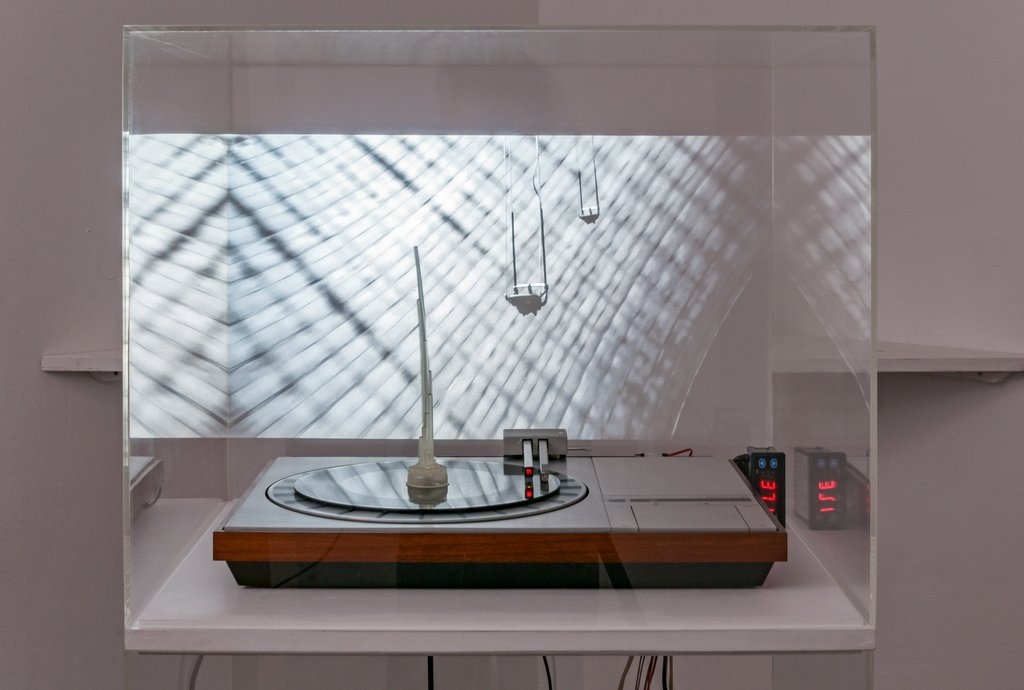
A “fast breeder” is also the basis of the installation Dream Water Wonderland (2010). In the 1970s, the so-called breeder reactor at the Kalkar nuclear power plant on the Lower Rhine seemed to be the answer to the increasing demand for electricity in Germany. The high-tech dream burst, leaving behind an absurd site of failed technological history that is now being repurposed as an amusement park. Dream Water Wonderland uses this dissonant backdrop in an installation ensemble that is accompanied by a narrative about bird creatures in need of energy that embody a strange synthesis of the technical and biological worlds.
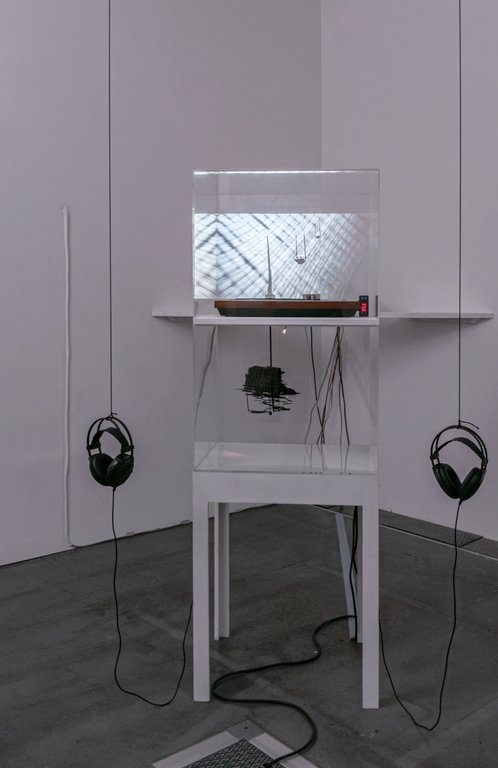
The two-part room installation Contact Call (2008) makes similar transgressions of technological and natural spheres tangible in sound: the most effective “luring calls” of our time, namely cell phone ringtones, emanate from the installation. Contact Call combines sound and sound sculpture and sparks a beguiling competition for visitors’ attention. Only when approaching the installation does it become clear who the creators of the noise are, which is usually perceived as a disturbance in art exhibitions.
The extensive supporting program accompanying the exhibition complements the exhibited positions with the activist practice of vegan lifestyles in the local Oldenburg context, in which the criticized meat factories can also be found.
The extensive educational program for the exhibition was developed by Barbara Loreck.
